Experimental Economics
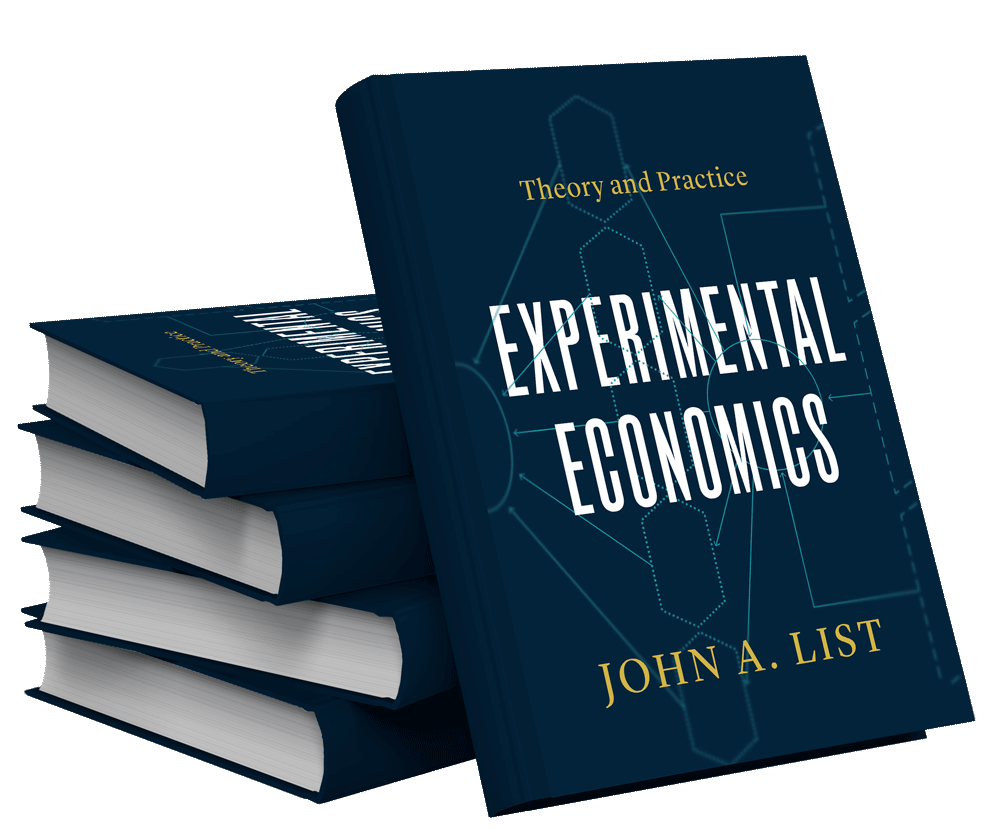
A landmark practical guide from the twenty-first-century pioneer in economics.
Leveraging the experimental method has become increasingly popular amongst economists. Experimental economics has been used to explore a wide range of questions such as determining optimal pricing or how to best incentivize teacher performance. Given the several merits of the experimental method, many are now recognizing it as the gold method for understanding causal effects. But until now the discipline has lacked comprehensive and definitive guidance for how to optimally design and conduct economic experiments.
For more than 30 years, John A. List has been at the forefront of using experiments to advance economic knowledge, expanding the domain of economic experiment from the lab to the real-world. Experimental Economics is his A-to-Z compendium for students and researchers on the ground floor of designing and conducting experiments and later analyzing and interpreting the generated data. List seeks not only to guide readers on how to develop and implement their experimental projects—everything from design to administrative and ethical considerations—but to help them avoid all the mistakes he has made in his career, too. Experimental Economics codifies its author’s refined approach to the design, execution, and analysis of laboratory and field experiments. It is a milestone work poised to become the definitive reference for the next century of experimental economics and economists.